Mini-Munich Succeeds Where KidZania Fails
webAuthor
Novalis
Credibility Rating
3/5
Good(3)Good quality. Reputable source with community review or editorial standards, but less rigorous than peer-reviewed venues.
Rating inherited from publication venue: LessWrong
A LessWrong reflection on children's educational environments with tangential relevance to AI safety themes around incentive design, genuine vs. performative alignment, and how institutional structures shape behavior.
Forum Post Details
Karma
37
Comments
0
Forum
lesswrong
Forum Tags
EducationParentingWorld Optimization
Metadata
Importance: 18/100commentary
Summary
A LessWrong post comparing two children's role-play city experiences—Mini-Munich and KidZania—analyzing why one succeeds at fostering genuine learning, creativity, and agency while the other produces a more superficial, commercialized simulation. The piece draws lessons about how environment design affects intrinsic motivation and authentic skill development.
Key Points
- •Mini-Munich gives children genuine autonomy and creative control, leading to more authentic learning experiences than KidZania's scripted corporate simulations.
- •KidZania's model is heavily branded and commercialized, turning role-play into advertisement exposure rather than genuine skill-building.
- •The design of learning environments profoundly shapes whether participants develop real competencies or merely perform them.
- •Authentic agency and open-ended challenges produce deeper engagement than structured, reward-driven systems.
- •The comparison offers broader lessons about institutional design, incentive structures, and how to cultivate genuine vs. performative behavior.
Cached Content Preview
HTTP 200Fetched Apr 7, 20267 KB
# Mini-Munich Succeeds Where KidZania Fails
By Novalis
Published: 2026-03-14
*This post is part of a larger exploration (not yet finished, but you can follow it at* [*minicities.org*](https://minicities.org)*) on whether a permanent miniature city could replace school. Tentatively, I think so, but the boundary between it and the adult world has to be deliberately porous, as I describe* [*here*](https://minicities.org/p/how-miniature-cities-can-interact)*.*
There are two well-known attempts to build miniature cities for children: Mini-Munich and KidZania.
Both have streets, storefronts, jobs, and a local currency. But they are built on opposing assumptions about what children are capable of. One treats children as consumers of scripted activities; the other lets them participate in a city whose parts depend on one another and is malleable to their actions.
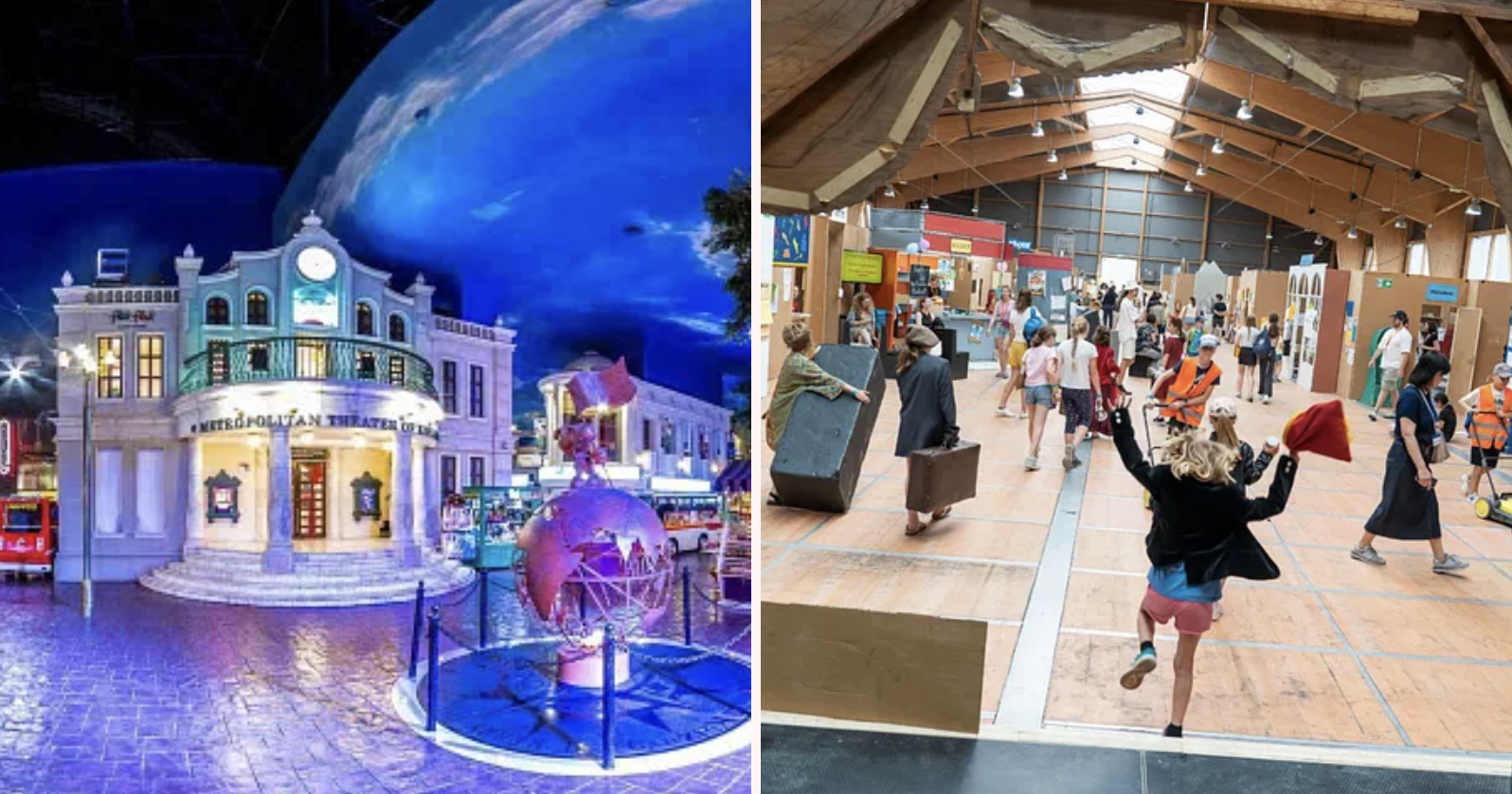
KidZania vs Mini-Munich
KidZania, founded in Mexico City in 1999 and now in around thirty countries, is a polished commercial operation. Corporate partners fund branded workplaces (banks, hospitals, restaurants) and children rotate through them in fifteen-to-thirty-minute slots. They enter a workplace, follow a pre-choreographed sequence of steps, collect their wages, and exit. The production values are impressive. But nothing connects to anything else. Goods made in workshops aren’t sold in the department store. The newspaper doesn’t run ads for other businesses. It has the aesthetic of interdependence, the streets, the storefronts, the uniforms, without any of its logic.
This is less a design failure than a consequence of what KidZania is. Scripted, time-boxed activities are after all a sensible way to run a throughput-based attraction where large numbers of children rotate daily through a fixed set of *“jobs”*. Allowing a child to stay at a sought-after job all afternoon because she is genuinely absorbed would be operationally catastrophic: it blocks every other child from that slot. The model that would actually deepen learning — open-ended time, children finding novel ways to do the job — directly undermines the model that makes the business viable.
* * *
Mini-Munich, organized by a group of Munich cultural pedagogues since 1979 as a three-week-long summer program, is built on the opposite premise: that a city only becomes real when it responds to what its inhabitants do.
What this means in practice is that the city functions as a social order rather than a collection of separate activities. The newspaper has a deadline. It must be finished by five o’clock for it to be printed and sold before the children go home in the evening. Children in the editorial office decide what to write about, set rates for ads, invent new sections, and type the copy themselves while reporters return from assignments across the city. When something goes wrong
... (truncated, 7 KB total)Resource ID:
21ec117915530ab2 | Stable ID: sid_qtbtaZcXti