You need user buy-in to scale your impact
webAuthor
Jamie_Harris
Credibility Rating
3/5
Good(3)Good quality. Reputable source with community review or editorial standards, but less rigorous than peer-reviewed venues.
Rating inherited from publication venue: EA Forum
An EA Forum post offering practical insight into the human and organizational factors that determine whether AI or other impactful interventions successfully scale, relevant to those thinking about deployment and adoption challenges in AI safety contexts.
Forum Post Details
Karma
62
Comments
1
Forum
eaforum
Forum Tags
Building effective altruismProduct managementEntrepreneurshipField-buildingTheory of change
Metadata
Importance: 35/100commentary
Summary
This EA Forum post argues that scaling the impact of AI or other interventions requires genuine user buy-in rather than top-down implementation. It emphasizes that sustainable, large-scale change depends on stakeholders actively embracing and participating in the solution, not just having it imposed upon them.
Key Points
- •Scaling impact requires genuine user adoption and engagement, not just technical deployment or mandated use.
- •Top-down approaches without stakeholder buy-in often fail to achieve lasting or meaningful change at scale.
- •Understanding user needs and motivations is essential for designing interventions that people will actually use.
- •Effective altruism projects should prioritize building trust and demonstrated value before attempting to scale.
- •The gap between deployment and real-world impact often comes down to whether users authentically embrace the tool or approach.
Cached Content Preview
HTTP 200Fetched Apr 7, 202621 KB
# You need user buy-in to scale your impact
By Jamie_Harris
Published: 2026-03-13
**Core premise**: for many impact-focused programs, it’s not enough to have a plausible theory of change; you also need buy-in from your users. All products/interventions have users, even if they’re not your intended beneficiaries. Successfully meeting real user needs is usually a necessary (but not sufficient) condition for scaling a cost-effective program; users who are bought-in are more likely to follow through with the recommended high-impact actions, and programs with strong demand can scale more easily.
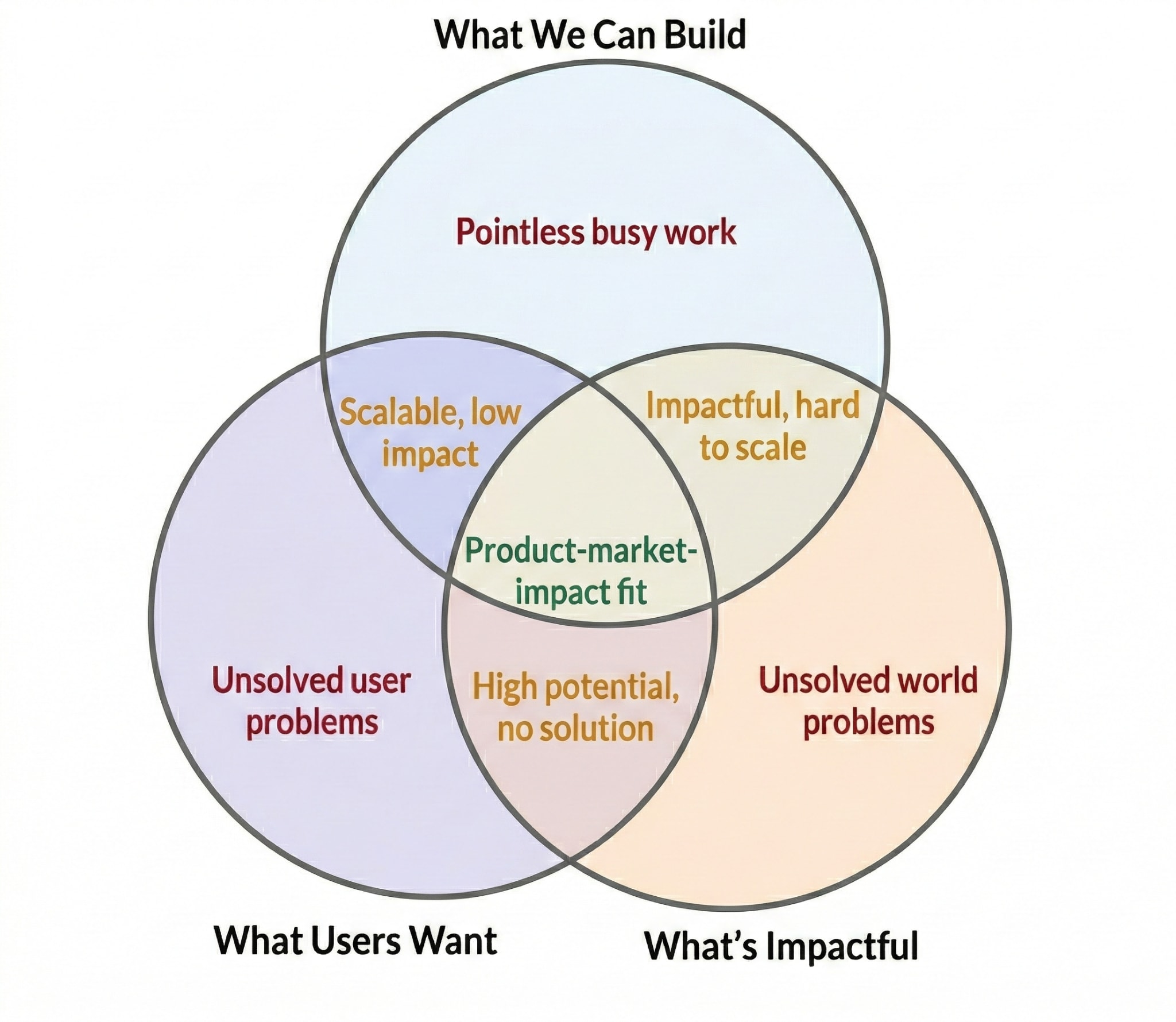
A useful way to think about this is that you want to seek “product-market-impact fit”. This means building programs that users genuinely want to engage with and that create cost-effective impact. The phrase is stolen from [Peter McIntyre](https://www.linkedin.com/in/peteramcintyre/), based on the startup concept of product-market fit. It’s a process I’ve been learning, implementing, and refining through my ~7 year [career](https://forum.effectivealtruism.org/posts/c6mPrJpbnPm4LhwRi/my-impact-focused-career-you-can-create-your-own-roles) in impact-focused talent search and community building, as co-founder of [Animal Advocacy Careers](https://animaladvocacycareers.org/) → Managing Director at [Leaf](https://leaf.courses/) → Courses Project Lead at the [Centre for Effective Altruism](https://www.centreforeffectivealtruism.org/).[^8llwqb1086p]
But it’s not just important for community building. For example, some researchers produce rigorous work that nobody acts on, because they never asked decision-makers what they needed. Others orient their research around the needs of funders, so end up [getting more work directly commissioned](https://rethinkpriorities.org/ghd-research-process/) and [influencing tens of millions](https://forum.effectivealtruism.org/posts/xbqiYyj6kdmraEqoX/rethink-priorities-2023-summary-2024-strategy-and-funding) in funding decisions.
User needs and demand are quicker to measure and optimise for than laggy impact metrics in the early stages of product development. But this is not a claim that user demand is *sufficient* for impact, or that nonprofits should ignore cost-effectiveness and designing their [theory of change](https://forum.effectivealtruism.org/posts/9t7St3pfEEiDsQ2Tr/nailing-the-basics-theories-of-change); it’s a claim that user buy-in is often an important and neglected part of making those things work in practice.
Or, as a low-quality meme:
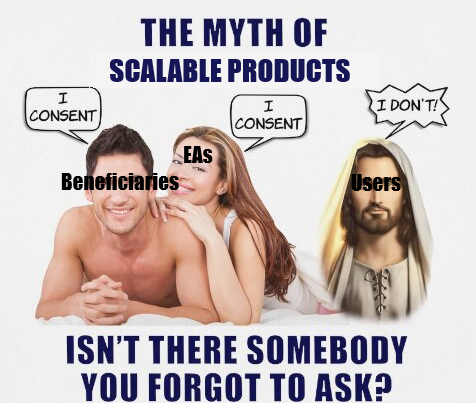
Why: You have users too
=======================
In a for-profit context, companies’ revenue and profit (i.e. their ability to function, grow, etc) usually comes directly from their beneficiaries. I.e. if t
... (truncated, 21 KB total)Resource ID:
38e7a7d13904b809 | Stable ID: sid_VRvfhwsp5z