Why Longtermism Is the World's Most Dangerous Secular Credo — Émile Torres, Aeon (October 19, 2021)
webA prominent critical essay targeting longtermism as an ideology; useful for understanding dissenting perspectives on the philosophical foundations that underpin much of mainstream AI safety and existential risk discourse.
Metadata
Importance: 52/100opinion piececommentary
Summary
Émile Torres presents a critical philosophical and political argument against longtermism, contending that its prioritization of vast speculative future populations over present human welfare constitutes a dangerous secular ideology. The essay argues that longtermism's framing can justify ignoring or even causing present-day harms in service of maximizing long-run expected utility, and that its growing institutional funding amplifies these dangers.
Key Points
- •Longtermism elevates the welfare of hypothetical future trillions above present humans, which Torres argues distorts moral priorities in harmful ways.
- •The ideology has moved from fringe philosophy to a well-funded movement with influence in tech, policy, and effective altruism circles.
- •Torres draws parallels between longtermist apocalypticism and religious eschatology, questioning its empirical and ethical foundations.
- •Critics argue longtermism can rationalize ignoring near-term suffering (poverty, climate change) in favor of speculative existential-risk reduction.
- •The essay situates longtermism within broader discourse on existential risk but warns its ethical framework risks becoming ideologically authoritarian.
Cited by 2 pages
| Page | Type | Quality |
|---|---|---|
| Longtermism's Philosophical Credibility After FTX | -- | 50.0 |
| Nick Beckstead | Person | 60.0 |
Cached Content Preview
HTTP 200Fetched Mar 20, 202647 KB
i
## Against longtermism
# It started as a fringe philosophical theory about humanity’s future. It’s now richly funded and increasingly dangerous
by Émile P Torres+ BIO
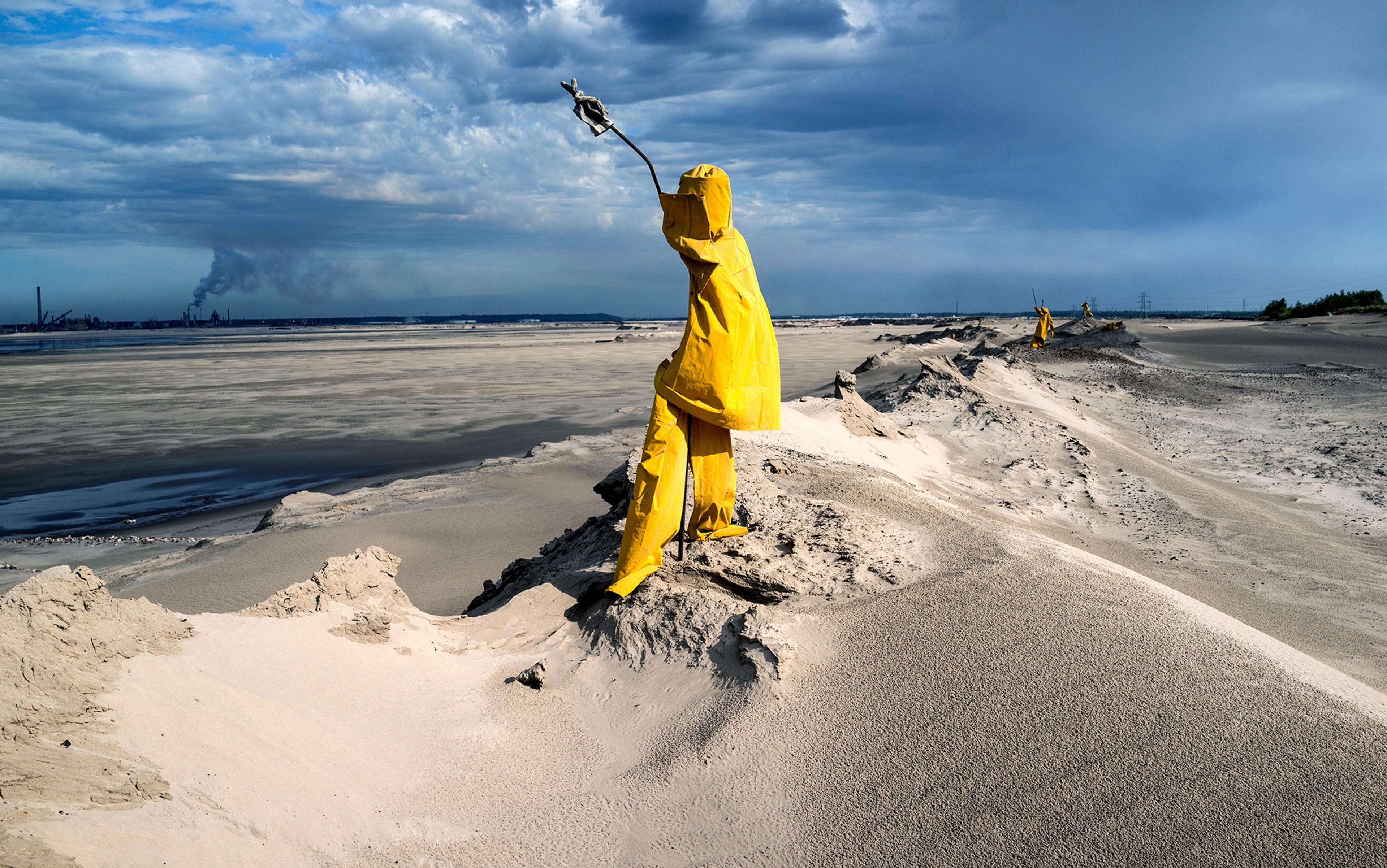
Scarecrows keep away migratory birds from the dangers of the tailing ponds created by the exploitation on the tar sands at Fort McMurray, Alberta, Canada. _Photo by Larry Towell/Magnum_
There seems to be a growing recognition that humanity might be approaching the ‘end times’. Dire predictions of catastrophe clutter the news. Social media videos of hellish wildfires, devastating floods and hospitals overflowing with COVID-19 patients dominate our timelines. Extinction Rebellion activists are shutting down cities in a desperate attempt to save the world. One survey even found that more than half of the people asked about humanity’s future ‘rated the risk of our way of life ending within the next 100 years at 50 per cent or greater.’
‘Apocalypticism’, or the belief that the end times are imminent, is of course nothing new: people have warned that the end is nigh for millennia, and in fact many New Testament scholars believe that Jesus himself expected the world to end during his own lifetime. But the situation today is fundamentally different than in the past. The ‘eschatological’ scenarios now being discussed are based not on the revelations of religious prophets, or secular metanarratives of human history (as in the case of Marxism), but on robust scientific conclusions defended by leading experts in fields such as climatology, ecology, epidemiology and so on.
We know, for example, that climate change poses a dire threat to civilisation. We know that biodiversity loss and the sixth mass extinction could precipitate sudden, irreversible, catastrophic shifts in the global ecosystem. A thermonuclear exchange could blot out the Sun for years or decades, bringing about the collapse of global agriculture. And whether or not SARS-CoV-2 came from a Wuhan laboratory or was cooked up in the kitchen of nature (the latter seems more [probable](https://www.medicalnewstoday.com/articles/covid-19-us-intelligence-rules-out-biological-weapon-origin) right now), synthetic biology will soon [enable](https://docs.wixstatic.com/ugd/d9aaad_4d3e08f426904b8c8be516230722087a.pdf) bad actors to design pathogens far more lethal and contagious than anything Darwinian evolution could possibly invent. Some philosophers and scientists have also begun sounding the [alarm](https://docs.wixstatic.com/ugd/d9aaad_b2e7f0f56bec40a195e551dd3e8c878e.pdf) about ‘emerging threats’ associated with machine superintelligence, molecular nanotechnology and stratospheric geoengineering, which look no less formidable.
Such considerations have led many sc
... (truncated, 47 KB total)Resource ID:
50baedbc4906e62b | Stable ID: sid_mP6x0hy9mq